It usually surfaces on day fourteen of a seventeen-day contingency period. The buyer's inspector has already walked the roof, checked the panel, and run water in every fixture. Then the sewer camera goes down the cleanout, and the footage shows a hairline crack in a cast iron line that has been carrying waste out of the house since Eisenhower was president. The seller is stunned. Nobody told them. No inspector flagged it at listing. No city notice ever arrived. They assumed, reasonably, that if this were a real problem, someone official would have said something by now.
Nobody was going to say something. San Jose never built a rule that requires it.
The assumption that doesn't hold here
A lot of Cambrian Park homeowners carry a mental model borrowed from cities that do things differently. In Morgan Hill, a seller cannot close without inspecting the sewer lateral and making required repairs first, an ordinance that took effect in June 2022 alongside a companion water conservation requirement. In Santa Cruz, point-of-sale sewer lateral inspection has been mandatory since 2018, with a cleanout required at the sidewalk before the sale can pass city review. San Mateo requires a licensed plumber to complete the inspection, and it waives the requirement only if the lateral was already fully replaced within the past 25 years under a city permit.
San Jose has none of that. The Silicon Valley Association of REALTORS has confirmed that the city does not require a sewer lateral inspection at the point of sale, and neither do Los Gatos or Saratoga. What San Jose does have is a split responsibility: the homeowner owns and maintains the upper portion of the lateral, the city owns the lower portion near the main connection. But nobody checks that upper portion unless someone chooses to look.
That someone, increasingly, is the buyer's inspector, not the seller, not the city, and not a checklist built into the transaction.
What the rules actually look like a few exits away
| City | Point-of-sale inspection required? | What happens if it fails |
|---|---|---|
| San Jose | No | Owner maintains upper lateral voluntarily; no city checkpoint at sale |
| Los Gatos / Saratoga | No | Same as San Jose, per SILVAR |
| Morgan Hill | Yes, since June 2022 | Seller must inspect and repair before closing |
| Santa Cruz | Yes, since 2018 | Sidewalk cleanout required; repairs or a Transfer of Responsibility form needed before close |
| San Mateo | Yes | Licensed plumber inspection; exempt if the lateral was fully replaced within the past 25 years |
| South San Francisco | Yes | Compliance certificate valid for 25 years once inspection passes |
The pattern is not that San Jose is careless. It is that San Jose decided this particular risk belongs to the private transaction, not the municipal process. For a newer neighborhood on modern PVC, that might not matter much. For Cambrian Park, it matters quite a bit.
Why Cambrian Park's pipes are the ones this catches
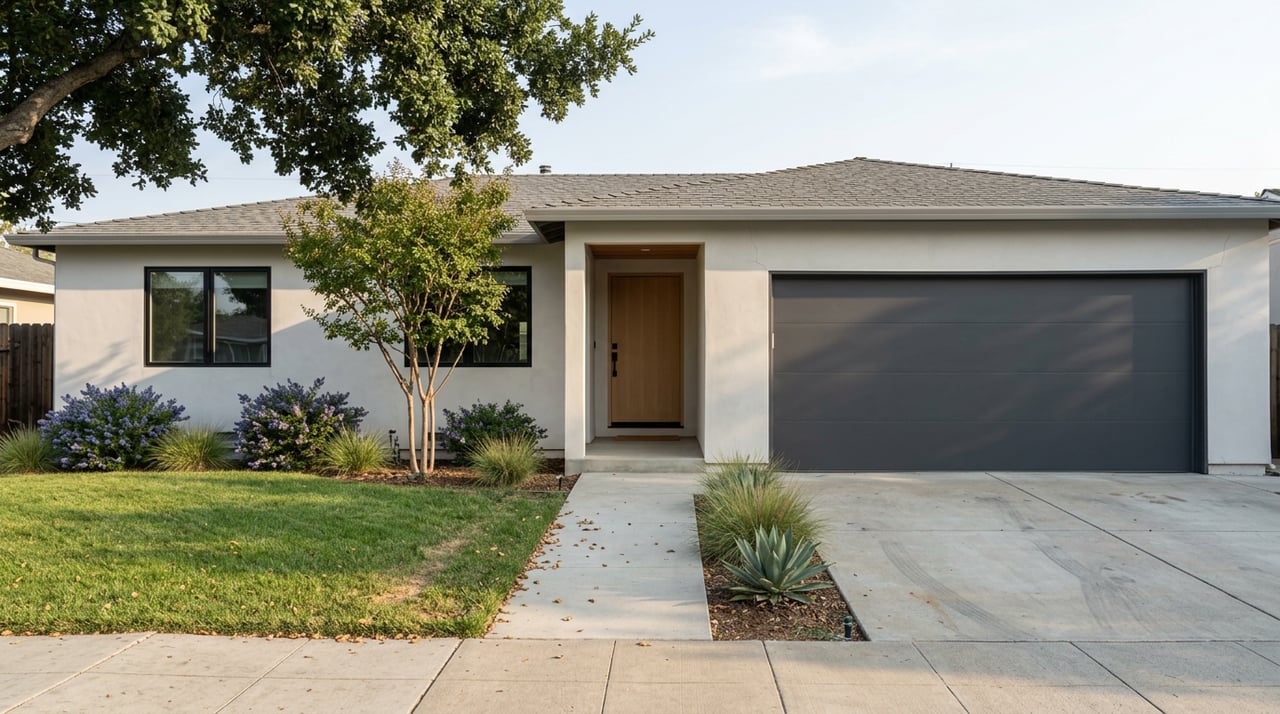
Cambrian Park's housing stock is mostly ranch-style construction from the 1950s through the 1970s, centered on the Camden Avenue and Union Avenue corridors between Willow Glen to the north and Los Gatos to the south. Homes from the 1950s typically went in with galvanized steel supply lines and cast iron drain, waste, and vent pipe. The slightly newer 1960s wave shifted to copper supply lines, which hold up better but still develop pinhole leaks after fifty-plus years of exposure to Bay Area water chemistry. Original clay and cast iron sewer laterals are common across both eras.
None of those materials were built to last forever. Galvanized steel has a typical functional lifespan of 50 to 70 years. Cast iron runs a similar range before corrosion, pitting, and internal scale buildup start narrowing the pipe from the inside. A home built in 1958 is now pushing 68 years on original pipe that was already rated to fail somewhere in that window. San Jose Water Company delivers water in the 11 to 26 grains per gallon range depending on the zone, solidly in "very hard" territory, and that mineral load accelerates scale formation inside aging lines every year the pipe sits in the ground.
None of this is unique to any one house on any one street. It is the shared condition of an entire neighborhood built in a specific decade with specific materials, which is exactly why the absence of a city checkpoint matters more here than it would somewhere newer. Silver Creek's builder-grade construction from the 1990s and 2000s carries a different, much smaller version of this risk. Cambrian Park's does not get that grace period.
What actually happens when the buyer finds it first
When a lateral problem surfaces through a buyer's own inspection rather than a seller's disclosure, the seller loses control of the timeline and the framing. The report lands mid-contingency, often with days left on the clock. The conversation shifts from "here is the condition of the home" to "here is a defect we found, what are you going to do about it." Buyers in a market like this one have leverage in that moment that they did not have when they wrote the offer, and they use it: a credit, a price reduction, or a request for repair before the deal can move forward.
Compare that to what happens in Morgan Hill or Santa Cruz, where the inspection is mandatory and happens on a known schedule, before the property ever hits the market. Sellers there know the condition of their lateral before they set a price. Cambrian Park sellers, absent that rule, often don't know until someone else tells them, at the worst possible moment to hear it.
The move that changes who holds the leverage
A pre-listing sewer camera inspection costs a fraction of what a late-escrow renegotiation typically costs in time and goodwill, and it converts an unknown into a known before a buyer ever walks through the door. Here's what that looks like in practice for a Cambrian Park seller getting ready to list:
- Schedule a camera inspection of the lateral before you set a list price, not after you accept an offer.
- Ask for the footage and a written summary, not just a verbal pass or fail.
- If the line shows real deterioration, decide upfront whether you'll repair it, price around it, or disclose it clearly with documentation in hand.
- Keep the inspection report ready to hand to a buyer's agent early in the process. A clean report removes the single biggest unknown a buyer's inspector can find, and a documented problem you've already priced for stops being a negotiating opening.
This is the same logic that applies to advanced pre-listing inspections in general, just applied to the one system that San Jose's rulebook happens to skip. A lateral that's already been camera-inspected and either repaired or accounted for in the price is no longer a landmine sitting under someone's driveway.
Where this sits in a market that's still moving fast
San Jose's single-family market has cooled slightly through the summer without losing its footing. In July 2026, homes across the city sold at 101.3 percent of list price on average, a step down from the pace earlier in the year, with a median of about 27 days on market, a week slower than the month before. It remains a seller's market. It is not the kind of market where a seller can afford a surprise that stalls a deal for two weeks while a plumber gets scheduled and a credit gets negotiated.
Cambrian Park continues to draw buyers who've done their homework on schools and commute times, families weighing this pocket of San Jose against Willow Glen's price tag or Los Gatos's ceiling. Those buyers tend to be careful, and careful buyers order thorough inspections. The lateral is no longer an afterthought item on most inspection scopes in this part of San Jose. Treating it as a footnote in your own prep work is the mismatch.
A few questions we hear often
Does San Jose require a sewer lateral inspection before I can sell my home? No. Unlike Morgan Hill, Santa Cruz, and San Mateo, San Jose has no point-of-sale sewer lateral ordinance, and neither do Los Gatos or Saratoga.
Who is actually responsible for the lateral if something goes wrong? In San Jose, the homeowner is responsible for the upper portion of the lateral running from the house, while the city is responsible for the lower portion near the main connection.
My home was built in the 1960s with copper supply lines. Does this still apply to me? Yes. Supply line material and drain line material are different systems. Even homes with newer copper supply pipe from the 1960s commonly still carry original cast iron or clay sewer laterals from the same era, which is the piece a buyer's inspector will camera.
Is a pre-listing inspection worth it if my home has been trouble-free for years? A trouble-free history doesn't rule out deterioration that hasn't caused a backup yet. A camera inspection tells you the actual condition rather than the absence of symptoms, and it gives you the option to address anything before a buyer's inspector does it for you.
If you're planning to list a home in Cambrian Park and want to walk through what a pre-listing inspection scope should include, or you'd simply like a clear-eyed read on where your home stands in today's market, the Pauline and Jacob David team is glad to help. Start with a free home valuation and we'll talk through the details that matter for your specific street, your specific decade of construction, and your specific timeline.